Everything that moved this quarter across Google Maps, AI Overviews, LLM search, and core SEO. Pulled from our research channels and freshened to this week. A lot of it is real. Some of it is bullshit. That is what you are here to decide.
Drop your name (or stay anonymous), then tap a verdict on every card. Votes are shared live across the whole mastermind and everyone in the room shows up in the tally at the bottom.
call BS on the ones that deserve it
LocalGoogle Maps and GBP
Google Maps and Local
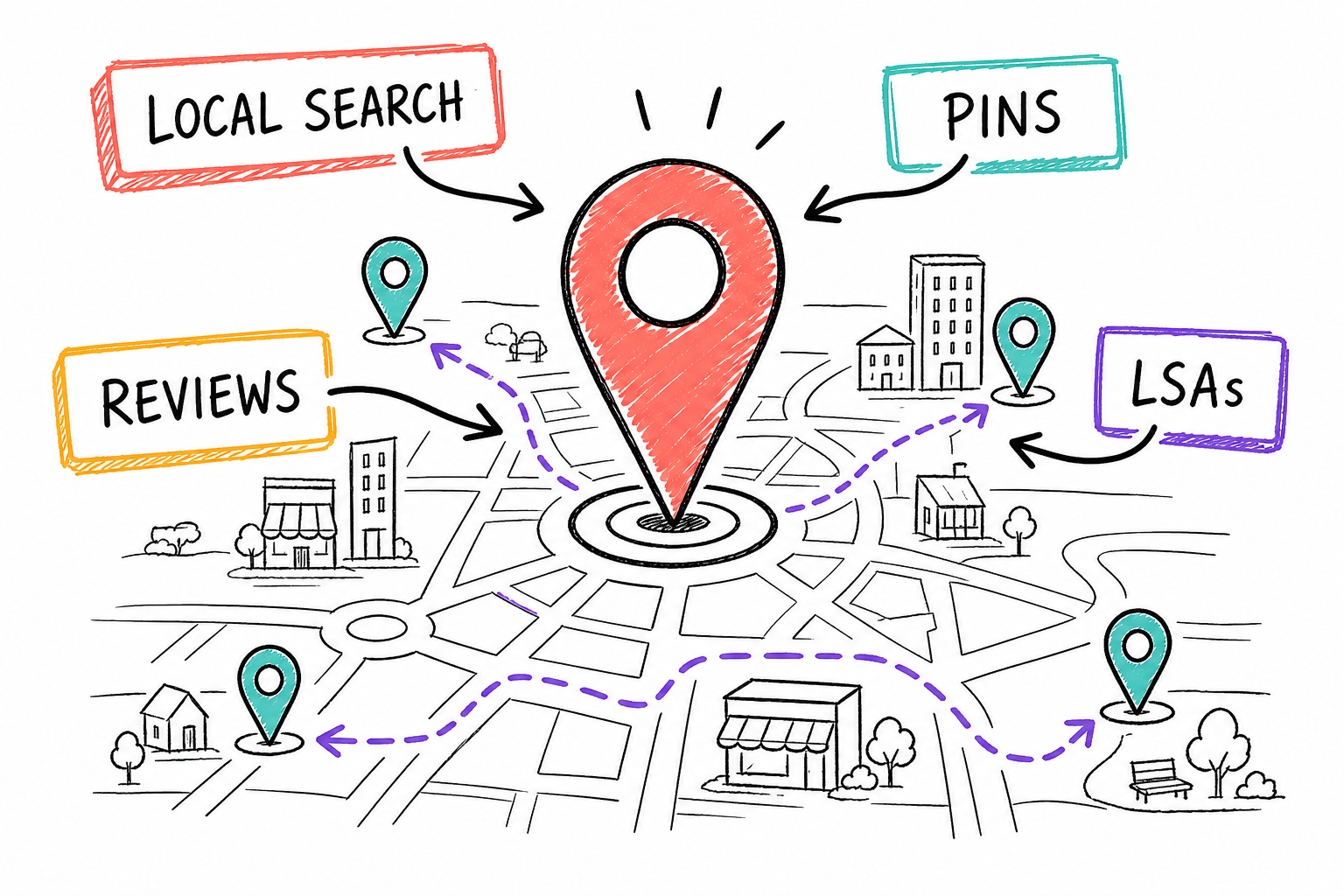
Three forces are reshaping Maps at once: AI local packs are shrinking the visible slots and dropping the call button, Gemini is auto-purging fake reviews, and GBP is now wired straight into GA4 and Gemini. Proximity still rules, but review velocity and service completeness jumped hard in the weightings.
Proximity is still roughly 55% of local rank. The rest is the part you can actually move.
Review velocity leaps from #93 to #11 in the ranking factors
Whitespark's 2026 survey of 47 experts across 187 factors: GBP signals 32%, reviews 20%, on-page 19%, links 15% lead the controllable set. Adding GBP predefined services jumped from #81 to #22.
Why it matters. Review velocity and a complete GBP service list are now near-top-tier levers, the cheap wins most operators skip in favor of citations.
Gemini now auto-enforces fake reviews, and it is aggressive
Pre-publication scam screening launched Apr 16 2026. On a spam spike Google now auto-removes content, pauses new reviews on the profile, alerts the owner, and posts a public warning banner. Over 292M policy-violating reviews were removed in 2025.
Why it matters. Any review SOP that names an employee, uses quotas, or offers incentives is now a policy risk that can pause a whole profile. Audit your SOPs.
AI local packs shrink to 1 to 2 slots and drop the call button
AI-generated local packs now surface only 1 to 2 businesses instead of the classic 3-pack, and exclude direct call buttons. One dataset: AI packs featured 5,943 unique businesses where regular 3-packs surfaced 18,330.
Why it matters. Clients at #2 or #3 in the classic pack can be invisible in the AI variant. Track both surfaces separately.
Rolled out Jun 8 to 10 2026: seven Business Profile metrics (calls, direction requests, bookings and more) now pull into a unified GA4 property on a rolling six-month window.
Why it matters. Local conversions that used to live only in the GBP dashboard are now provable in the same stack clients already trust.
Local Services Ads now run inside Google Maps itself
LSAs now appear directly in the Maps app (iOS first), pulling from existing LSA data and Maps reviews. Advertisers cannot opt out of Maps placement without pausing Search ads entirely.
Why it matters. Organic local real estate is getting squeezed further by paid placement inside the map surface.
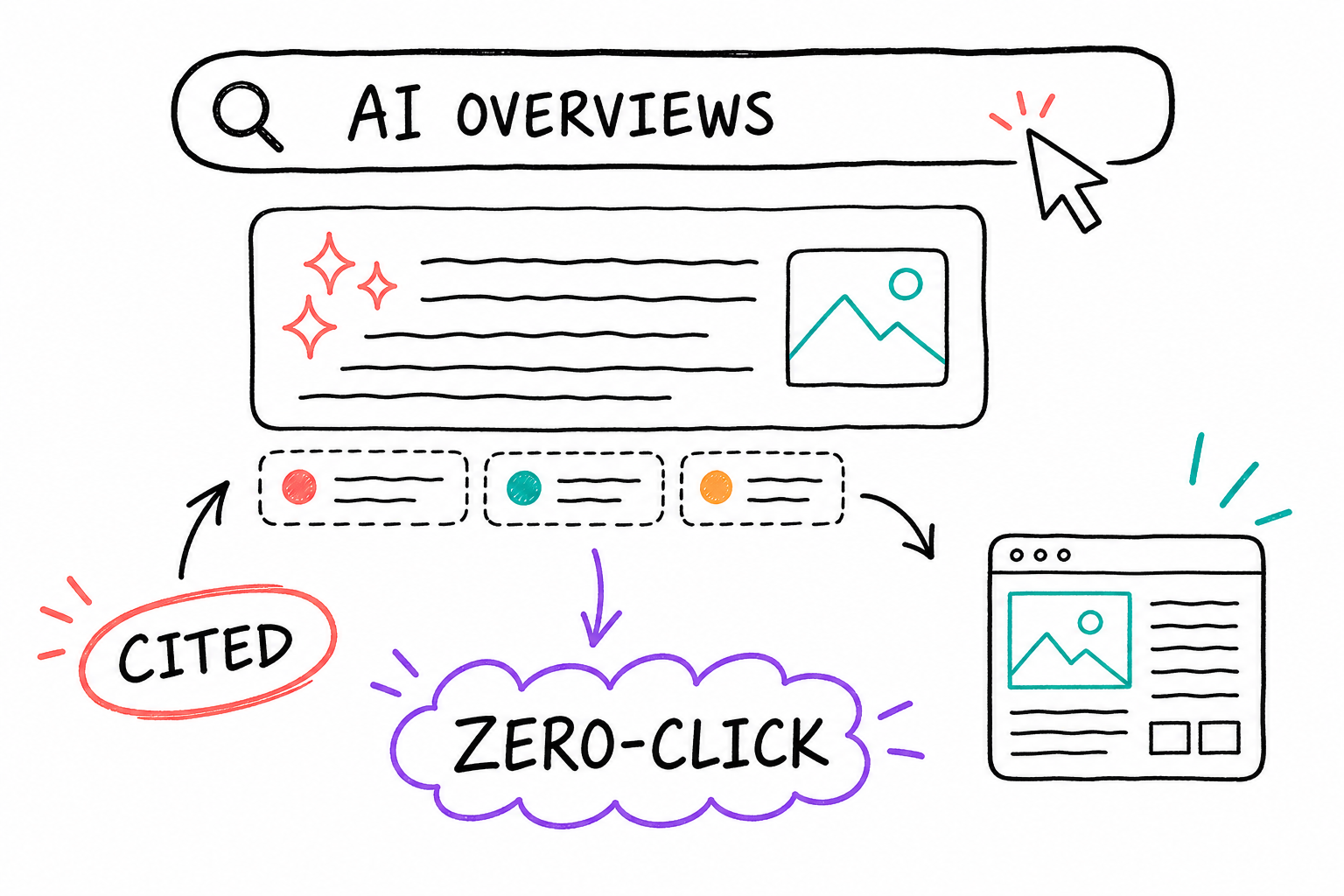
AI Mode is the default Google Search experience for over a billion users now, running on Gemini 3.5 Flash. Zero-click is the baseline case. The operator question moved from how do I rank to how do I get cited, and the citation data is finally mature enough to act on.
Being cited beats being clicked. Citation presence belongs in every monthly deck.
AI Mode is the default Search experience for 1B+ users
At Google I/O 2026 Google made AI Mode, on the new Gemini 3.5 Flash, the default globally. Follow-ups from an AI Overview now flow into a full conversational AI Mode session with context carried across.
Why it matters. AI Mode is what most searchers see first. Every traffic model needs to assume synthesized answers are the default entry point.
Being cited beats being clicked: +35% CTR when cited
Brands cited inside an AI Overview see roughly a 35% CTR lift versus uncited on the same query. Seer's 2026 data: cited brands earn 15.74% paid CTR versus 11.19% uncited.
Why it matters. Citation now has a measurable dollar value, organic and paid. Strongest argument yet for citation tracking in every report.
Semrush data shows 93% of searches inside AI Mode end with no click to an external site. AI Mode crossed 100M monthly active users in early 2026 on this pattern.
Why it matters. Rankings held, traffic dropped is now the expected pattern for AI-heavy query mixes, not a red flag. Report share of voice, not just sessions.
AI Overviews CTR is recovering after bottoming out
AIO CTR bottomed at 1.3% in Dec 2025, then climbed to 2.4% by Feb 2026, an 85% jump in two months as Google tuned link placement inside the overview boxes.
Why it matters. The kills-all-clicks narrative was true at launch but is already softening. Re-test CTR assumptions quarterly.
Most-cited content leads with a clear answer in the first 2 to 3 sentences of a section, uses H2/H3 that mirror query phrasing, and structures each section to stand alone. AI systems extract sections, not whole articles.
Why it matters. Directly actionable for every client blog and service page. Standalone-answer paragraphs are now a citation checklist item.
Gemini 3.5 Pro delayed to July 17, expect another shift
Google delayed Gemini 3.5 Pro to Jul 17 2026 for an architectural rebuild after testers flagged reasoning gaps. Flash already ships as the default AI Mode engine.
Why it matters. Expect a visible shift in AI Mode answers and citations mid-July. Snapshot citation presence on top client queries right after.
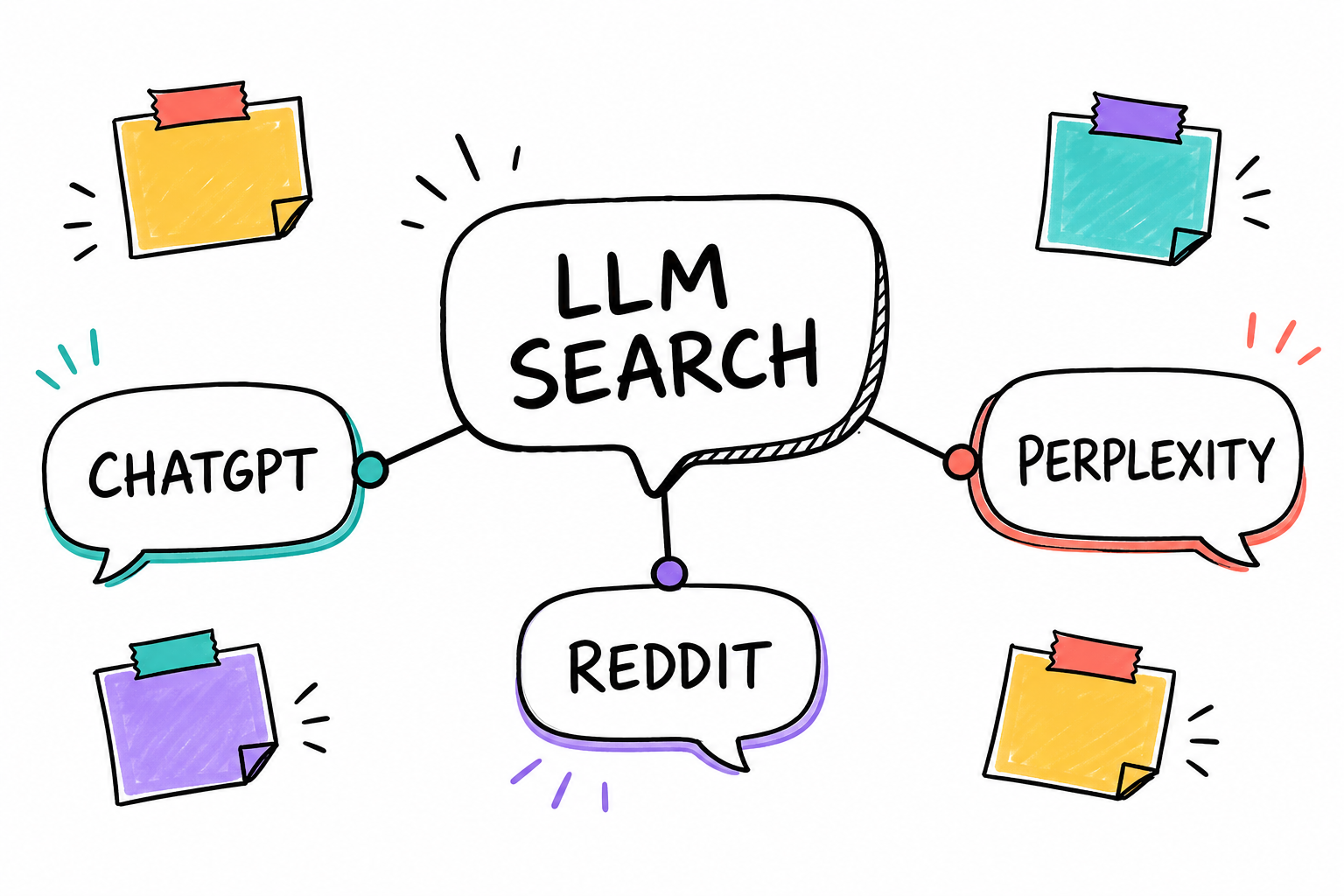
LLM search visibility went from theory to a measurable channel with real numbers in 2026, and they move fast. ChatGPT still leads referral share but is bleeding it to Claude and Gemini month over month. Structured data and Reddit are proving out as the two highest-leverage levers operators actually control.
The single biggest correction for the room is right here. Some of what got sold as GEO does nothing.
often oversold
llms.txt is functionally useless: 1 citation out of 94,614
Only about 10% of 300k domains have an llms.txt file. Across 94,614 cited URLs in 11,867 AI responses, exactly one traced to an llms.txt page. Google's Gary Illyes confirmed Google does not support it.
Why it matters. Stop billing llms.txt as a visibility deliverable. JSON-LD and content structure carry the weight. This one gets sold constantly.
Content with proper schema shows 2.5x higher odds of appearing in AI answers across ChatGPT, Perplexity, and AI Overviews. JSON-LD must match visible HTML exactly, or it only reaches indexing, not the citation path.
Why it matters. A concrete, buildable checklist item. Organization and Person schema disambiguate the entity, then FAQ and Article carry the facts.
Reddit is the biggest lever for Perplexity and AIO citations
Reddit supplies 46.7% of Perplexity's cited sources and 21% of AI Overview citations, more than YouTube and Quora combined. Citations favor recency and entity-specific language, not brand posts.
Why it matters. A defined Reddit play (3 to 5 subreddits, real account history, no astroturfing) is now a core tactic. Perplexity citations often land in 2 to 3 weeks.
Perplexity cites a source 97% of the time it answers, ChatGPT only 16%. Wikipedia is 47.9% of ChatGPT's top citations. Only 11% of domains get cited by both engines.
Why it matters. A strategy for one engine does not transfer. ChatGPT rewards Wikipedia-adjacent authority, Perplexity rewards Reddit and high-recency sources.
ChatGPT's referral lead is cracking, Claude jumped 17 points
ChatGPT's share of AI referrals is at an all-time low on some trackers. Claude posted a raw +17 point jump in one month and is now the clear #2, up from #5. Gemini overtook Perplexity in several trackers.
Why it matters. Any AI-visibility audit built only around ChatGPT is already stale. Monitor ChatGPT, Claude, and Gemini together.
AI traffic converts 5 to 8x better, but volume is tiny
ChatGPT referrals convert at 14 to 16%, Perplexity 10.5%, versus a Google organic baseline near 1.8 to 2.8%. But all AI engines combined are still only about 0.29% of total search referrals.
Why it matters. The pitch is small but premium. AI search is a high-intent niche worth capturing early, not yet a volume replacement.
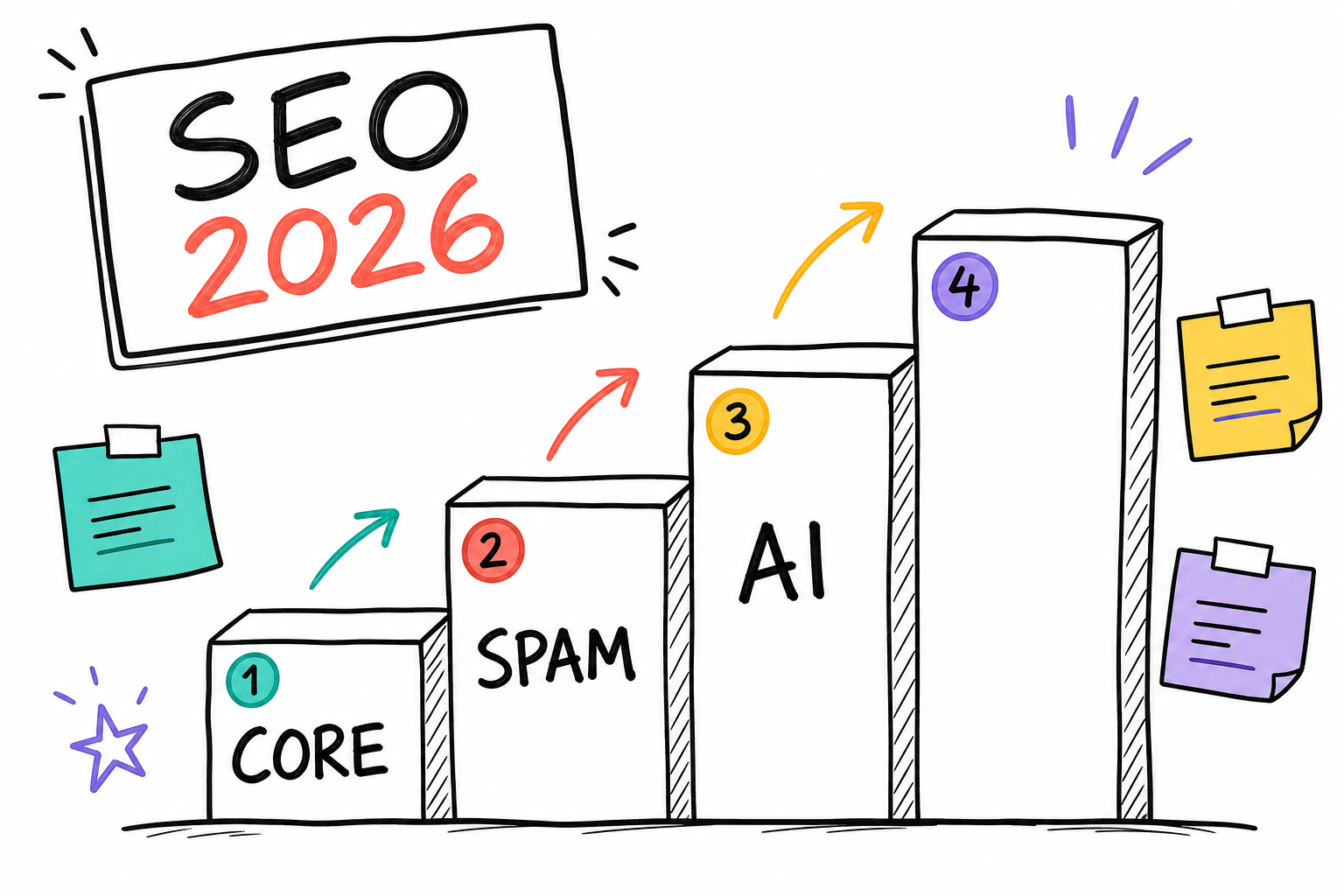
Google shipped three core-level events in 90 days: May core, June spam, and an unconfirmed July 11 to 12 shake. Nobody's rankings have been stable long enough to call a baseline. Meanwhile Google is publicly debunking the AI-SEO hacks half the industry is selling.
Separate core impact from spam impact from noise, or you will misdiagnose every swing this quarter.
often oversold
Google names the fake AI-SEO tactics, on the record
Google's Jun 15 2026 gen-AI guide update states llms.txt has zero effect and explicitly calls out content chunking, keyword stuffing for AI, and inauthentic brand-mention farming as tactics not to pursue.
Why it matters. Half the AI-SEO packages being sold are exactly these. Google already parses multi-topic pages and surfaces the passage itself.
The Jun 24 to 26 2026 spam update completed in two days. Google says it targeted scaled content abuse, cloaking, and scraped or AI-generated content at the content level, not links. Sites with no obvious spam still dropped 10 to 15%.
Why it matters. We did nothing spammy is not protection anymore. Content that reads AI-generated or templated at scale is in scope even without bad links.
A 10M-SERP study found E-E-A-T about 8% of ranking weight overall, about 24% for YMYL. Sites above 30/40 on E-E-A-T get cited in AI Overviews 7.3x more. Original research is cited 4.7x more.
Why it matters. The number to put in front of clients who resist author bios and credentials. E-E-A-T is now a measured multiplier on citation odds.
Search Console now reports your AI visibility directly
On Jun 3 2026 Google launched Search generative AI performance reports in GSC: dedicated reporting for AI Overviews, AI Mode, and generative Discover visibility.
Why it matters. You can finally show clients hard numbers on AI-surface visibility. Pull this into every monthly deck.
47% of AIO citations come from pages ranking below #5
Nearly half of AI Overview citations pull from organic positions below the top 5. Content scoring 8.5+/10 on semantic completeness (134 to 167 word self-contained units) is 4.2x more likely to be cited.
Why it matters. You can rank #8 and still win the citation if the passage is a complete answer. Passage optimization now matters as much as page rank.
Three algorithm events in 90 days, most volatile on record
The May core update ran nearly 12 days and moved 79.5% of Top-3 positions per SE Ranking, the highest volatility measured. SE Roundtable is now tracking an unconfirmed Jul 11 to 12 event on top of the June spam update.
Why it matters. Client reporting has to separate core from spam from noise, or you misdiagnose every swing this quarter.